SCROLL
MEASURE · ANALYZE · INTERVENE

How do schools make a decision for their students?

They measure — and they ask.
2,895
data points collected for that child.

INCUBATED AT STANFORD · SCALED WITH UNICEF INNOVATION
Stanford Graduate School of Education UNICEF Innovation
ANALYZE

Schools see every data point in one simple dashboard.

Easy to use, easy to navigate — built for teachers, not analysts.

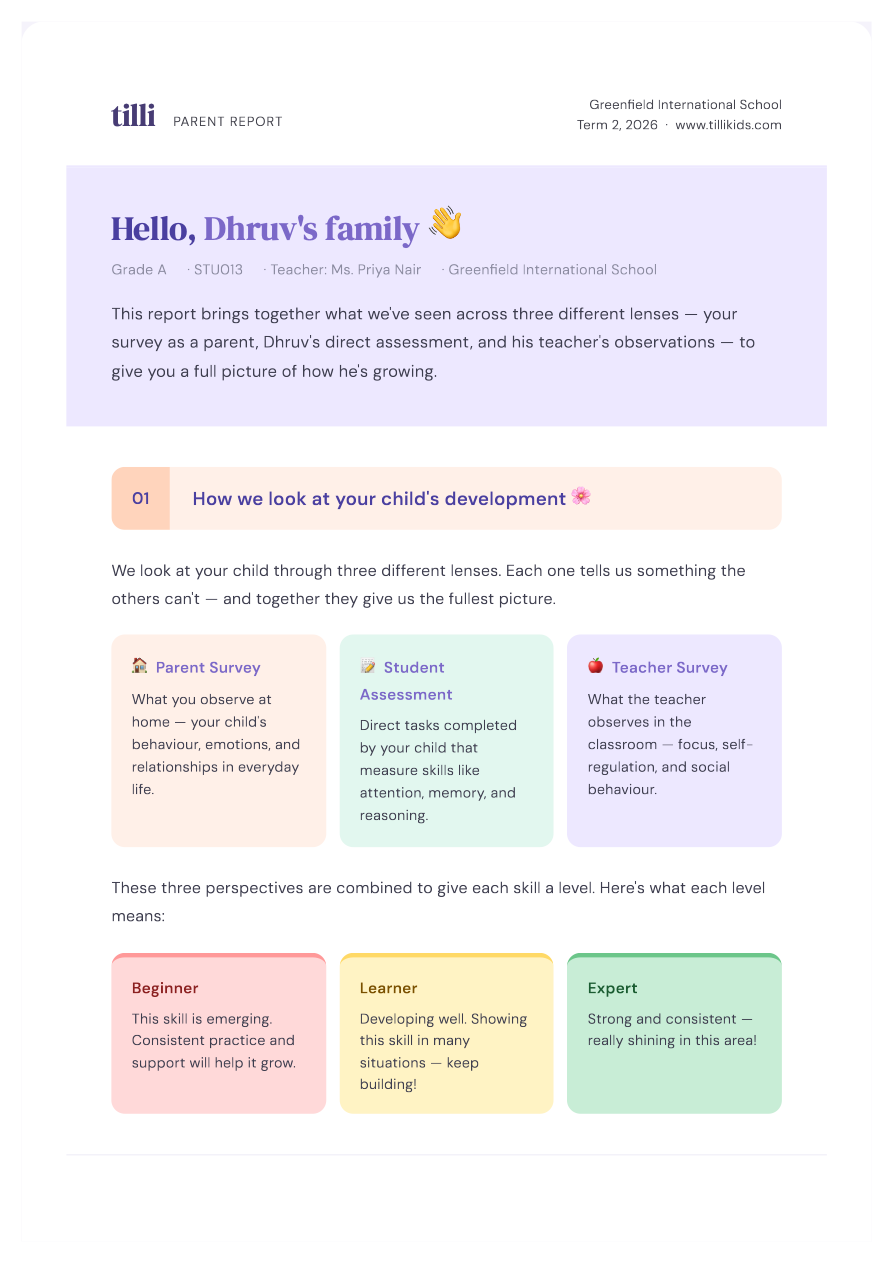
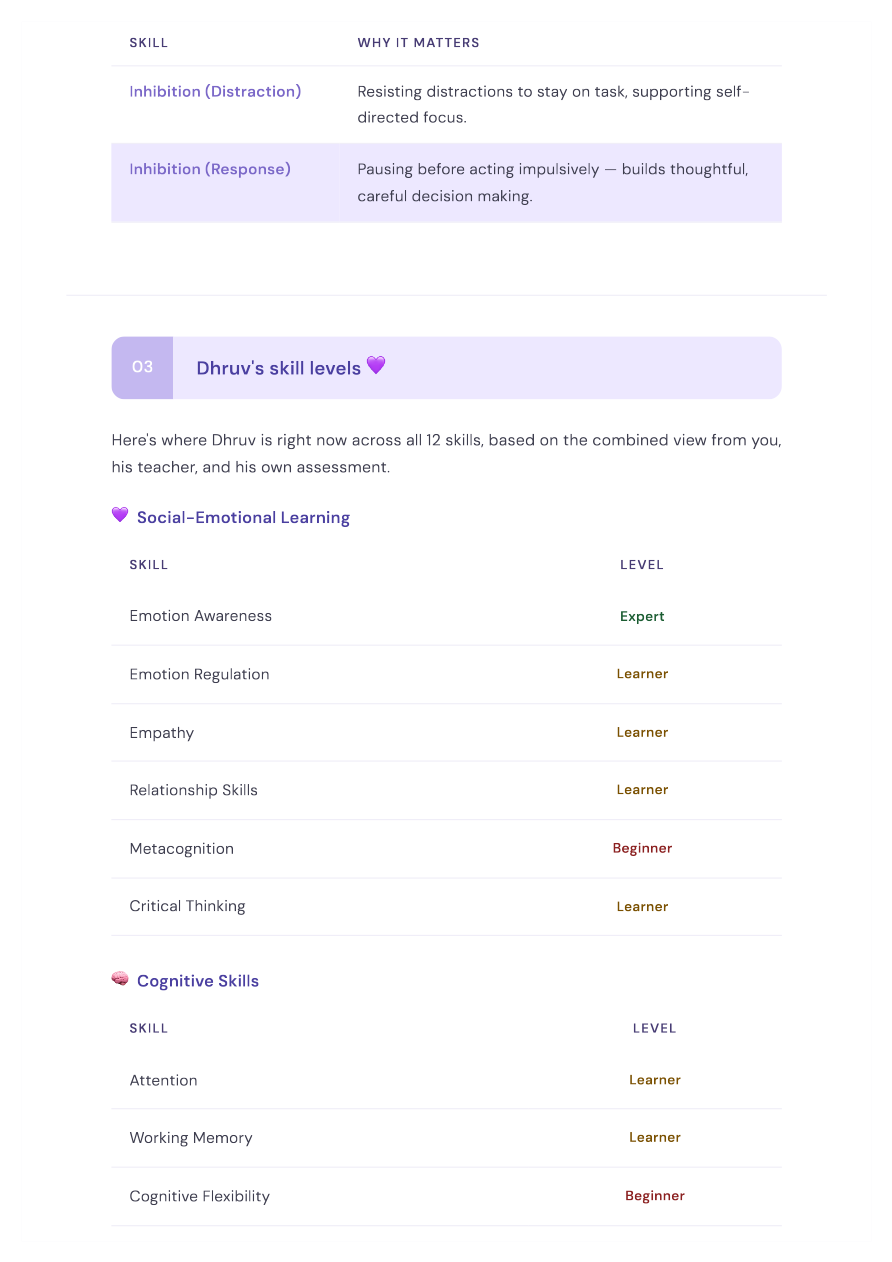
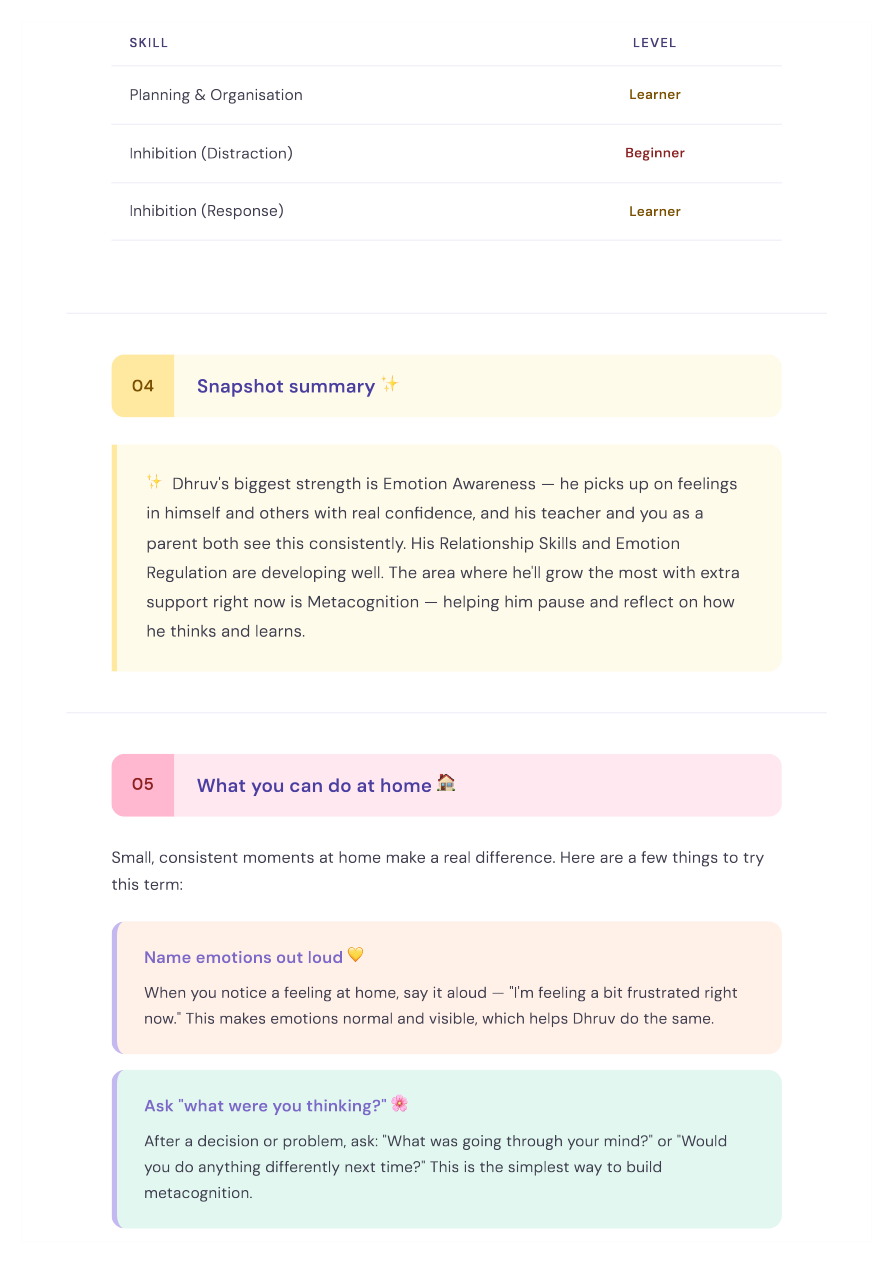
Tilli parent report — cover page Tilli parent report — skill levels Tilli parent report — what to do at home

Teachers share reports parents love to receive.

Term by term: strengths, growth areas, and small things to try at home — for every child.

Book a demo

Every data point comes from the 3 people who matter most.

Teacher
What they observe in the classroom
The student themselves
Direct tasks, in the child's own voice
Parents
What home sees that school can't
MEASURE — 360° VIEW
01 — The teacher's strand
Structured observation of each child, right in the classroom.
02 — The parent's strand
A short survey on what home sees — behaviour, emotions, relationships.
03 — The child connects them
Direct tasks completed by the child tie both strands together.
TEACHER OBSERVATION
"Stays focused during group tasks."
Rarely Sometimes Often
3× a year · 5 minutes per child
PARENT SURVEY
"Talks about their feelings at home."
Never Sometimes Often
On WhatsApp · 10 minutes, once a term
Tilli child task — breathing activity
DIRECT-FROM-CHILD TASK
Play-based tasks the child completes themselves.
Emotion Matching · Hearts & Flowers · Memory Game

Get a 360° view of the student.

12 foundational skills — measured from every side, term after term.

01 · Attention
Focusing on relevant information and sustaining it on a task.
02 · Working Memory
Holding and using information over short periods.
03 · Cognitive Flexibility
Shifting between tasks, perspectives, and strategies.
04 · Inhibition — Distraction
Resisting distractions to stay on task.
05 · Inhibition — Response
Pausing and thinking before acting.
06 · Planning & Organisation
Setting goals, planning steps, and structuring tasks.
07 · Emotion Awareness
Recognising and understanding one's own emotions.
08 · Emotion Regulation
Managing and responding to emotions appropriately.
09 · Empathy
Understanding and sharing the feelings of others.
10 · Relationship Skills
Building and maintaining positive interactions with others.
11 · Metacognition
Reflecting on and understanding one's own thinking.
12 · Critical Thinking
Analysing and evaluating information to form judgments.

Every child walks into middle school developmentally on track.

Not a promise — a measurement. See exactly where each child stands, term by term, and what to do about it.

12 skills measured 3× a year 2,895 data points per child Growth visible, not guessed
ASK

Any AI can answer. Only Tilli knows your student.

The same question, asked two ways. One answer is for any child. One is for this child.

A GENERIC AI CHATBOT
How do I help a 7-year-old who keeps losing focus in class?
Great question! Here are 10 general strategies: minimise distractions, take movement breaks, use positive reinforcement, try a reward chart…
Advice for the average child. It has never met yours.
ASK-TILLI · KNOWS DHRUV'S DATA
How do I help Dhruv focus in class?
Dhruv's attention is at Learner, but his working memory is Expert — and his parents report the same pattern at home. Start group tasks with the Week 14 attention warm-up, then let him lead the recall step.
Grounded in 2,895 data points on this one child.

30+ schools are already with us.

12,510
children reached
4,000+
educators trained
2 → 15
sections to branches, one school, one year
95%
of teachers rate training highly effective
Tilli teacher training Teachers working with Tilli materials Stanford campus Tilli SEL Teaching Kit
Every morning the children ask their teachers: are we doing a Tilli activity today?
Mr. Upali Gunasekara · Principal, Polymath International School
HundrED Global Collection 2026 · QS Reimagine Education Gold Winner · GESAwards Special Track Winner · UNICEF Venture Fund
WHAT PARTNER SCHOOLS DID

Measure. Ask. Intervene.

MEASURE
Start with a real baseline

In the first weeks, every child is assessed across all 12 skills — teacher observation, parent report, and direct tasks. Repeated three times a year, so growth is visible, not guessed.

2,895 data points per child.
Skill levels from a Tilli report
ASK
Ask-Tilli, on WhatsApp

Teachers ask about a child or a class and get lesson plans, behaviour guidance, and that child's own data — in the middle of a school day, in seconds.

How do I support Dhruv's focus during group work?
Dhruv's attention is at Learner. Try a 2-minute attention warm-up before the task — here's one from Week 14.
ASK-TILLI · WHATSAPP
INTERVENE
A curriculum, not a workshop

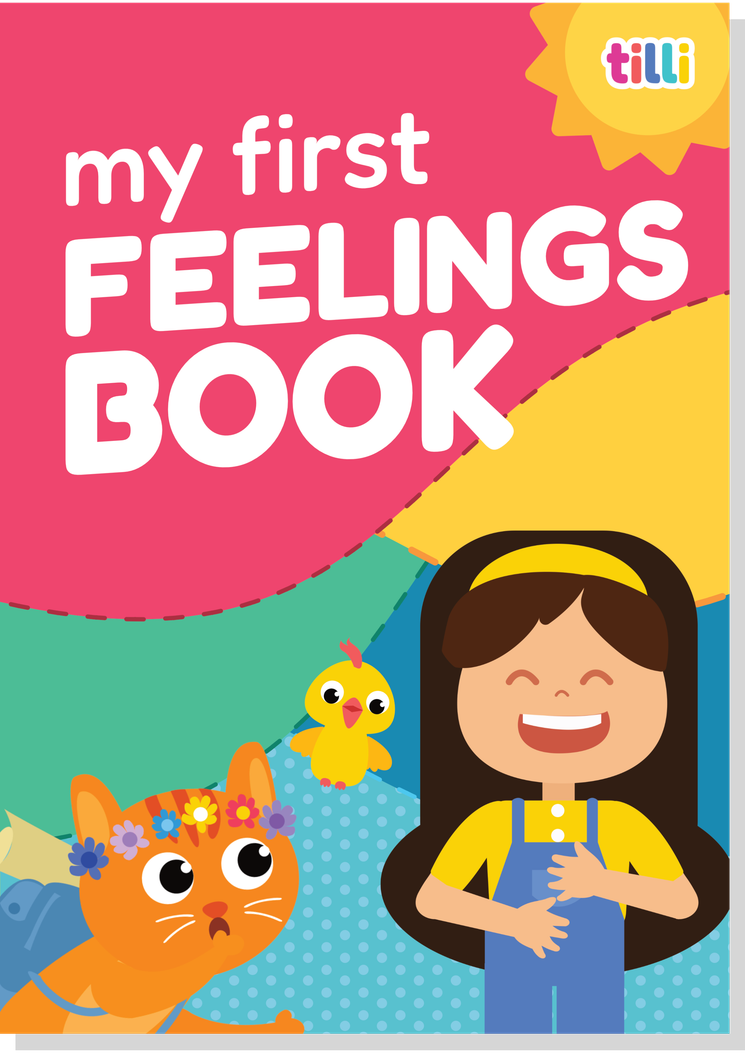
36 weeks of play-based lessons for every class — Feelings Time workbooks, Teacher's Guidebooks, and the SEL Teaching Kit. 30 minutes a week. No new period, no extra prep.
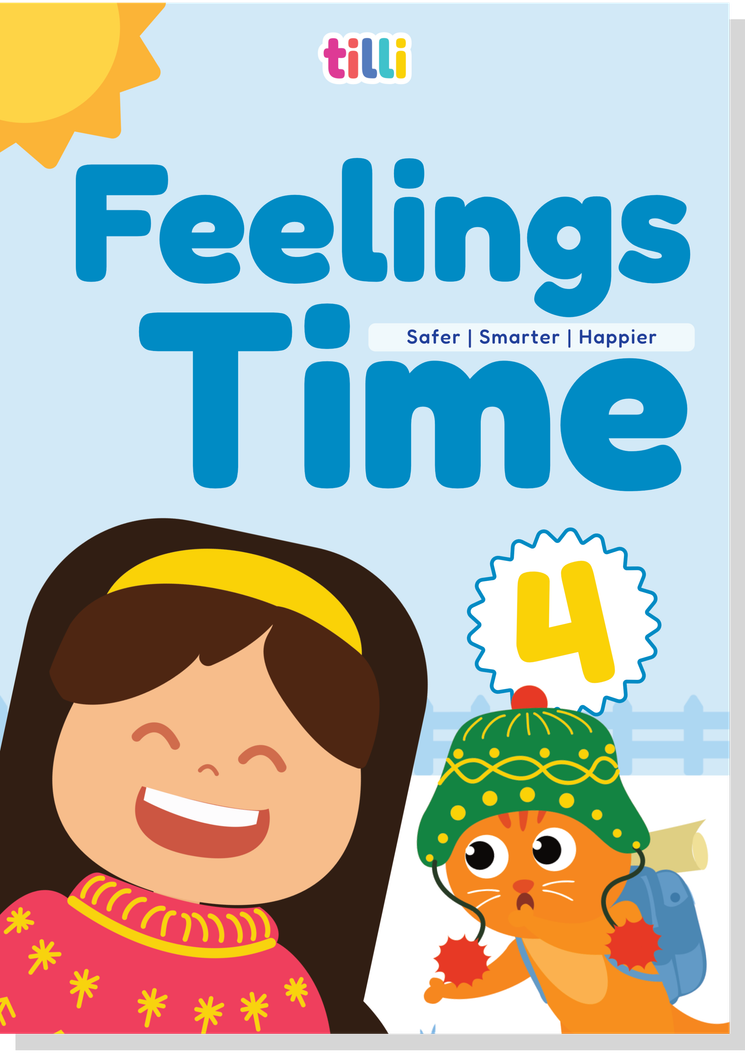
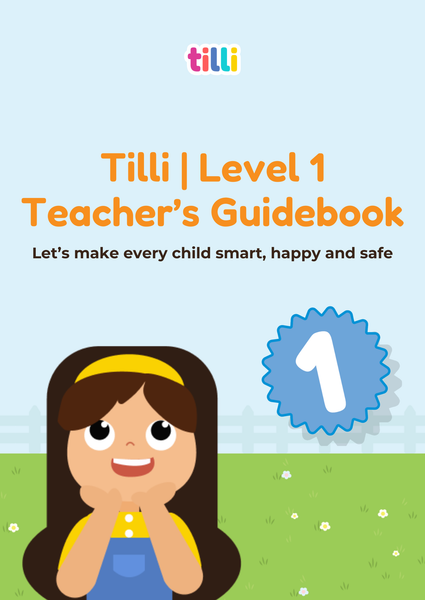
Feelings Time workbook Teacher's Guidebook My First Feelings Book
Measure Ask Intervene
Baseline → midline → endline. 12 skills, three angles, three times a year — and dashboards update the moment data lands.
Ask-Tilli answers teachers' day-to-day questions with each child's own data — lesson plans, behaviour guidance, class summaries. On WhatsApp, in seconds.
A 36-week play-based curriculum mapped to the same 12 skills you measure — 30 minutes a week, workbooks and guidebooks included.

Let Tilli help you understand your students' development better.

A 30-minute conversation with our founding team — about your school, your children, and what's possible.

Book a demo
kavindya@tillikids.com
Tilli character waving
tilli Developmentally on track by 10.
© Tilli Kids Inc. · www.tillikids.com